
A favorite chair can quietly become a barrier. At first, standing up takes a little extra effort. Then carrying groceries feels heavier, stairs require a handrail, and a walk around the neighborhood becomes shorter. When families ask, “why do seniors lose strength?” they are usually asking an even more personal question: Can this change, and can independence be protected?
The encouraging answer is that strength loss is common with age, but it is not simply something a person has to accept. Every older adult has a different starting point, health history, and goal. With the right support, many people can improve their ability to stand, walk, balance, carry, reach, and participate more fully in daily life.
Why Do Seniors Lose Strength?
Beginning around midlife, the body gradually loses some muscle mass and power if those muscles are not regularly challenged. This age-related change is often called sarcopenia. It can affect the larger muscles of the legs and hips first, which is why getting up from a low chair or climbing steps may become difficult.
But age is only part of the story. A person who stays active, eats adequately, manages health conditions, and practices strength and balance exercises may maintain much more function than someone younger who is largely inactive. The number on a birthday cake does not determine what someone is capable of doing.
Strength can also fade quickly after a period of less movement. An illness, surgery, a fall, a hospital stay, grief, travel, or a painful flare-up can interrupt normal routines. Even a few weeks of spending most of the day seated can make the legs feel less reliable. This can create a frustrating cycle: movement feels harder, so a person moves less, and less movement leads to further weakness.
Muscles need regular reasons to work
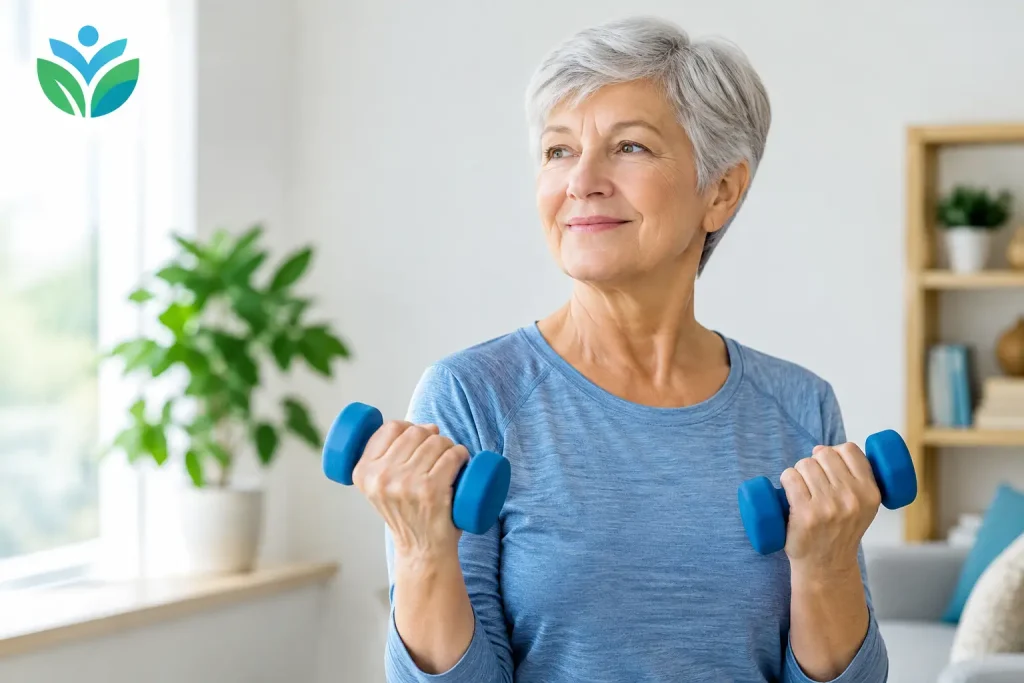
Walking is wonderful for the heart, mood, and circulation, but walking alone may not fully maintain the strength needed for everyday tasks. Muscles respond to challenge. Safe activities such as sit-to-stands, supported squats, step-ups, resistance bands, light weights, and carrying manageable objects can help rebuild practical strength.
The best choice depends on the individual. Someone with knee pain may begin with seated leg exercises and supported standing work. A person recovering from a fall may need to focus first on balance, confidence, and the ability to shift weight safely. Progress does not have to look dramatic to be meaningful. Standing from a chair with less help is real progress.
Nutrition, hydration, and recovery matter
Muscle needs fuel. Seniors sometimes eat less because of reduced appetite, dental concerns, medication side effects, loneliness, limited grocery access, or the belief that smaller meals are always healthier. Without enough protein and overall nutrition, the body has a harder time maintaining and repairing muscle.
Hydration matters too. Dehydration can contribute to fatigue, dizziness, and reduced exercise tolerance. A physician or registered dietitian can offer individualized guidance, especially for people managing kidney disease, diabetes, heart conditions, swallowing concerns, or medication-related dietary restrictions.
Sleep is another often-overlooked piece of the picture. Poor sleep can leave a person less steady, less motivated to move, and slower to recover. Strength is built not only during activity but also during rest.
Health conditions and medications can contribute
Arthritis, back pain, osteoporosis, Parkinson’s disease, peripheral neuropathy, heart or lung conditions, diabetes, and depression can all affect strength or the willingness to move. Pain can cause someone to guard a joint. Numbness in the feet can make walking feel uncertain. Shortness of breath may lead someone to avoid activity even when gentle movement could be beneficial.
Some medications may contribute to dizziness, fatigue, muscle aches, or changes in balance. That does not mean a person should stop taking medication on their own. It means new weakness, repeated falls, unusual exhaustion, or a sudden change in walking ability deserves a conversation with a health care provider.
The Difference Between Normal Change and a Warning Sign
A gradual decline in strength can be addressed with a thoughtful plan. Sudden weakness is different. New weakness on one side of the body, facial drooping, trouble speaking, severe chest pain, fainting, sudden confusion, or a major loss of coordination requires immediate medical attention.
Less urgent changes still deserve attention. Notice whether it takes longer to rise from a chair, whether household chores are being avoided, or whether a loved one is using walls and furniture for support. These can be early signs that strength, balance, vision, pain, or confidence needs support.
It is also helpful to recognize the emotional side of weakness. After a fall or near-fall, many seniors become understandably cautious. Yet fear can shrink a person’s world when it leads them to stop moving altogether. A compassionate, gradual approach can help restore trust in the body without pushing beyond safe limits.
Rebuilding Strength for Everyday Life
The goal is not to train like a 25-year-old. The goal is to make daily life feel more possible. A personalized routine should reflect what matters most to the person: getting in and out of bed, gardening, walking into a favorite restaurant, playing with grandchildren, traveling, or simply feeling steadier at home.
A good starting point often includes a few movements practiced consistently two or three times each week, with walking or other comfortable movement on most days. For many people, that may include standing up from a sturdy chair, gentle heel raises while holding a counter, wall push-ups, seated rows with a band, and supported balance practice. Form, breathing, and a safe environment matter more than doing many repetitions.
Progression should be gradual. When a movement becomes easier, a person might add one or two repetitions, move more slowly with control, use slightly more resistance, or reduce support only when it is safe to do so. Some days will feel stronger than others. That is normal. Consistency over months matters far more than one perfect workout.
Balance and flexibility support strength
Strength is most useful when it works with balance and mobility. Tight hips or ankles can make it harder to take a confident step. Poor balance can make strong legs feel less trustworthy. For this reason, an effective senior fitness plan often includes gentle stretching, posture work, core stability, and balance exercises alongside resistance training.
This is especially valuable for people with mobility limitations or chronic conditions. A program should be adapted, not abandoned. An exercise can be done seated, with a countertop nearby, in a pool, or in shorter intervals. The right plan meets the person where they are and creates a clear path forward.
Support Makes the Difference
Many seniors know they should exercise, but knowing is not the same as feeling safe and motivated enough to begin. Individual coaching provides guidance, accountability, and encouragement during the moments when progress feels slow. It also helps remove the pressure to keep up with a crowded class or follow a generic online routine.
At EightLimFit, personalized senior fitness can take place in a client’s home, at a community, or virtually, with attention to the whole person. That may mean celebrating improved stamina alongside improved confidence, or adjusting a session when pain, stress, or a difficult week affects energy. Physical strength and emotional encouragement often grow together.
Small Wins Build a Stronger Tomorrow
Strength loss does not have to be the final word on aging. It may be a signal to slow down, get support, check in with a medical provider, and begin again with movements that feel manageable. The first goal might be five confident chair stands or a short walk without holding onto furniture.
Those small wins matter because they return something precious: choice. With patient practice and caring guidance, many seniors can feel more capable in their bodies and more confident in the life they want to keep living.