
A workout should not leave you feeling like you failed because it was built for someone else. Adaptive fitness training starts with a more encouraging question: what would help your body and your life feel better right now? For one person, that may mean getting up from a favorite chair with greater ease. For another, it may mean walking with more confidence, managing stairs, returning to a yoga practice, or simply having the energy to enjoy a full day.
This approach is especially meaningful when mobility, balance, pain, a health condition, a long break from exercise, or the natural changes of aging have made standard fitness routines feel out of reach. Movement is not reserved for the already fit. With thoughtful support, it can become a practical and uplifting part of daily life.
What Adaptive Fitness Training Really Means
Adaptive fitness training is personalized exercise that is adjusted to fit an individual’s current abilities, goals, health considerations, and environment. It does not mean settling for less. It means choosing the right starting point and making progress in a way that feels safe, sustainable, and motivating.
A chair may become a tool for supported strength work. A wall may help with balance practice. Exercises may be completed seated, standing, on a mat, or with small changes in range of motion. The goal is not to copy the workout happening across a crowded gym. The goal is to build useful strength, flexibility, stamina, and confidence for your own life.
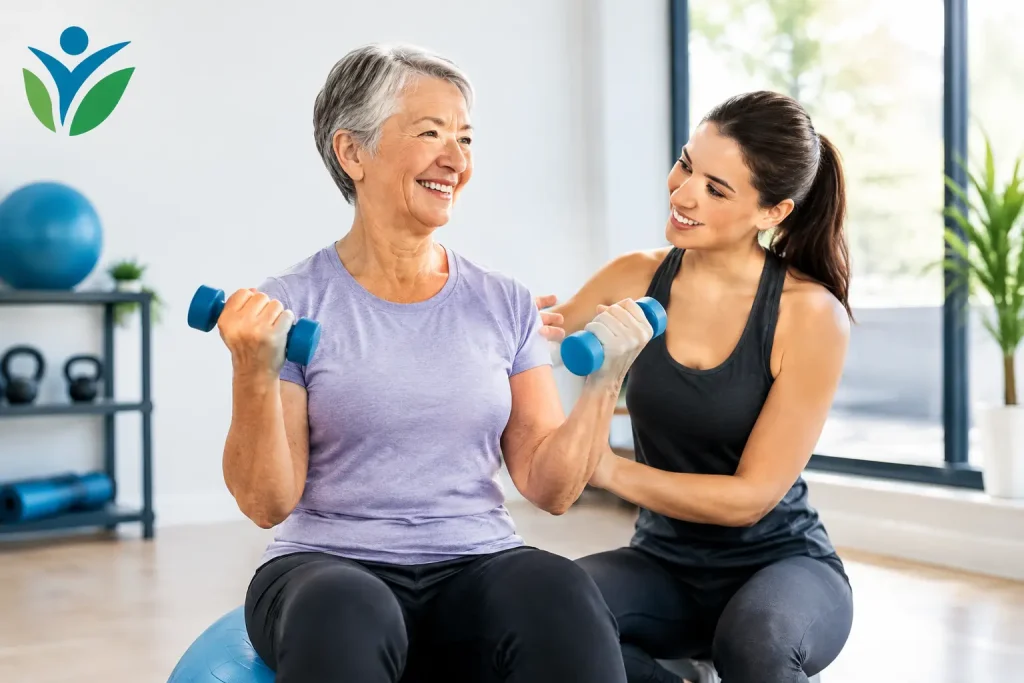
For an older adult, a personalized session might focus on leg strength for standing and walking, core engagement for steadier movement, and balance exercises that support fall prevention. For a busy professional feeling stressed and disconnected from their body, the work may include mobility, breath-centered movement, realistic habit planning, and accountability. Both deserve an approach that listens before it asks.
Adaptation Is Not the Same as Avoidance
There is a difference between adapting movement and avoiding movement altogether. If an exercise causes sharp pain, dizziness, or unusual symptoms, it should be stopped and discussed with an appropriate medical professional. Yet many people assume that stiffness, age, or a diagnosis means they should do very little.
Often, the more helpful path is guided movement that respects limitations while gently developing capacity. A skilled trainer can adjust posture, pace, support, repetitions, resistance, and rest. The session can be challenging without being punishing.
Progress may be measured in ways that matter far beyond a scale or a heavy weight. You may notice you can stand longer while preparing a meal, carry groceries more comfortably, turn around with better control, or feel less anxious about walking outside. Those are meaningful wins.
Why Personalized Movement Builds Confidence
Confidence grows through evidence. Each time you practice a movement safely and realize, “I can do that,” your body and mind receive a different message than fear or frustration has been sending.
This is one reason generic programs can be discouraging. They often ask people to keep pace with a video, complete a fixed number of repetitions, or push through exercises that do not match their needs. When the body cannot cooperate with that plan, people may blame themselves. The issue is not a lack of willpower. The plan simply was not personal enough.
A supportive fitness relationship changes the experience. You are seen as a whole person, not as a limitation to work around. Your trainer can notice when you are ready for a little more challenge, when you need a modification, and when celebrating your consistency matters more than adding another set.
For clients living with back pain, peripheral neuropathy, Parkinson’s disease, balance concerns, or other health challenges, that attentive coaching is particularly valuable. Exercise choices should reflect the person’s day-to-day experience and medical guidance. What works beautifully one week may need adjustment the next. Flexibility in the plan is a strength, not a setback.
The Daily Skills That Matter Most
The best fitness plan is connected to the life you want to live. That is why adaptive training often includes movements that support everyday tasks rather than chasing impressive-looking exercises.
Strong legs can make it easier to rise from a chair, get in and out of a car, and use stairs. Improved balance can support more secure walking and turns. Better shoulder mobility can help with reaching into cabinets, getting dressed, and carrying items. Core strength can improve control and posture during many everyday movements.
Stamina matters, too. It is the difference between attending a family event with energy left to enjoy the conversation and needing to sit out because every activity feels exhausting. Building stamina does not require punishing workouts. It may begin with a few minutes of purposeful movement and grow steadily over time.
This is also where patience matters. A person who has been inactive for years may need a slower progression than someone returning after a brief interruption. Neither path is better. Sustainable movement is built by meeting the real person in front of you, not by forcing a deadline.
How a Session Can Be Adapted
Personalization begins with conversation. Before choosing exercises, a thoughtful trainer wants to understand what you enjoy, what feels difficult, what you have tried before, and what you hope will change. Your goals may be practical, emotional, or both.
From there, an adaptive session can be shaped around your current needs. If standing for long periods is difficult, exercises can begin seated or include frequent rests. If balance feels uncertain, stable support can be added. If a certain joint is sensitive, range of motion and resistance can be modified. If motivation has been the biggest obstacle, the program can focus on simple routines that fit naturally into the week.
The setting can matter just as much as the exercise selection. Many people feel more comfortable working out at home, where the chair, stairs, hallway, and kitchen counter are part of their real environment. In-home adaptive fitness training can make practice immediately relevant to daily routines. For clients in Phoenix and Scottsdale, that personal support can come directly to the home or senior living community. Virtual coaching can also provide encouragement and structure from wherever you are.
Small Progress Creates Lasting Change
People sometimes wait to begin until they feel more motivated, less busy, or more physically prepared. But feeling ready often comes after the first small action, not before it.
Start with goals that are specific and kind. Instead of promising to exercise every day for an hour, commit to a realistic appointment or a short movement practice you can repeat. Notice what gets in the way without judgment. Maybe fatigue is highest in the afternoon. Maybe a fear of falling makes certain movements feel intimidating. Maybe you need someone in your corner to remind you that a missed day does not erase your progress.
Whole-person coaching recognizes that fitness habits are tied to mood, routines, stress, sleep, confidence, and the stories we tell ourselves. Supportive conversations and goal setting are not extras. They can be the reason a fitness plan finally becomes a lasting part of life.
At EightLimFit, the focus is not on asking clients to become someone else. It is on helping each person feel stronger, steadier, healthier, and more capable in the life they already value.
Choosing the Right Support for Your Body
A good adaptive fitness professional should make you feel heard. They should ask about your goals, health history, current movement concerns, and preferences. They should be willing to explain why an exercise is being used and change it when it is not serving you.
You should never feel pressured to ignore pain or compete with others. At the same time, good coaching offers gentle accountability. Encouragement is not empty praise. It is the steady belief that you can take the next appropriate step, even when progress feels gradual.
If you are managing a medical condition, recovering from a significant health event, or experiencing new symptoms, coordinate with your healthcare team before beginning or changing an exercise program. Personalized fitness support works best as part of a thoughtful circle of care.
Your next step does not have to be dramatic. It can be a conversation, a supported sit-to-stand, a short walk, or the decision to ask for help. Every capable, confident movement begins with the willingness to meet yourself where you are and move forward from there.