
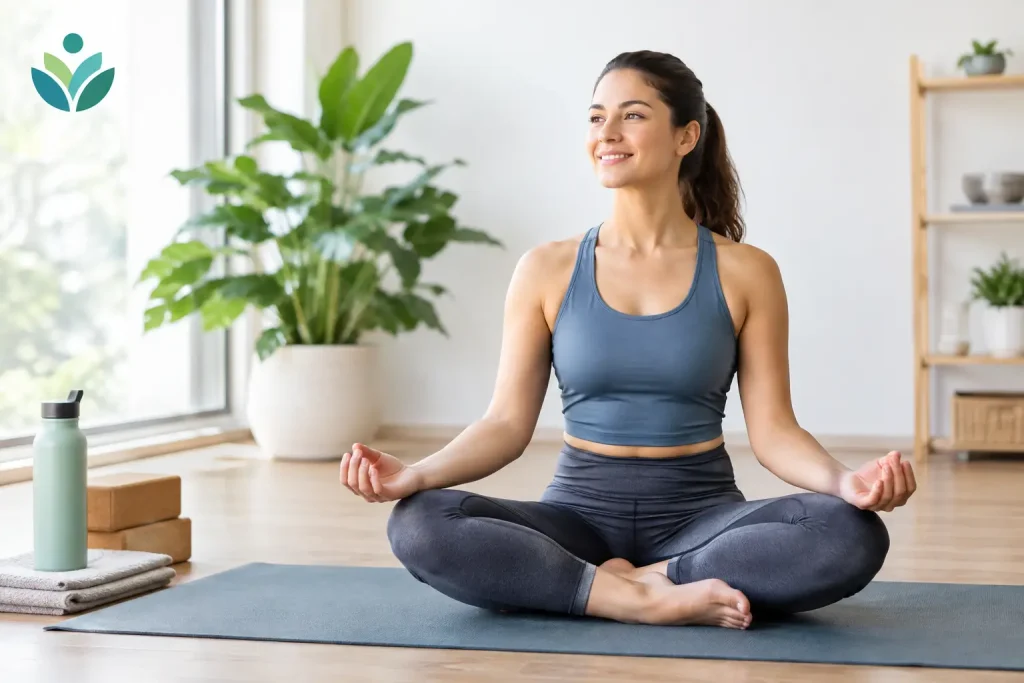
A yoga class should not leave you feeling as though you have to keep up, bend farther, or prove anything. The best answer to how to start yoga safely is to begin with a practice that respects the body you have today. Whether your goal is to move with less stiffness, improve balance, manage stress, or feel stronger getting through daily activities, yoga can meet you where you are.
For many adults, especially those returning to movement after an injury, illness, busy season, or long break, the safest beginning is also the most encouraging one: go slowly, use support, and let progress build over time. Yoga is not a performance. It is an opportunity to listen to your body while developing strength, flexibility, steadiness, and confidence.
How to Start Yoga Safely: Begin With Your Real Needs
Before choosing a class or following a video, pause and consider what you want from yoga. You may want help rising from a chair, walking with greater confidence, easing tension through your shoulders, or creating a calmer routine. Those goals matter because they help determine what kind of practice will serve you best.
A gentle beginner, chair, restorative, or adaptive yoga practice is often a better starting point than a fast-paced class. A slower class gives you time to learn each position, adjust your alignment, and notice how your body responds. More energetic styles can be enjoyable, but they may require frequent transitions, weight-bearing through the wrists, or balances that are not yet appropriate for everyone.
If you live with osteoporosis, arthritis, back pain, joint replacements, Parkinson’s disease, neuropathy, high blood pressure, dizziness, or a recent injury, speak with your health care professional about any movement precautions before starting. Then share those details with your instructor. A skilled teacher does not see this information as a limitation. It is useful guidance for creating a practice that feels supportive and safe.
Choose Guidance That Makes Room for You
Yoga can be practiced in a studio, at home, in a senior living community, or virtually. The right setting depends on your comfort level, transportation, budget, and need for individual attention. What matters most is that the instructor welcomes questions and offers options without making you feel singled out.
Look for a teacher who asks about injuries, health concerns, and goals before class begins. They should be comfortable showing modifications and explaining that rest is always allowed. If an instructor pushes everyone toward the same version of a pose, that class may not be the right match for you.
Personal guidance can be especially valuable when balance, mobility, or confidence is a concern. In-home or one-on-one instruction allows the practice to be built around your available space, daily routines, and current abilities. For someone who is nervous about getting down to the floor or standing back up, a chair-based practice may be the ideal place to begin. There is no prize for choosing the hardest option.
A chair is a yoga tool, not a shortcut
A stable chair can make yoga more accessible while still offering meaningful benefits. It can support seated stretches, standing strength work, gentle twists, and balance practice. Holding the back of a chair during standing poses can help you work on posture and leg strength without the fear of falling.
Avoid chairs with wheels, and place the chair on a surface where it will not slide. If you use a wall, countertop, or sturdy piece of furniture for support, make sure it can bear light pressure without moving. These simple choices can make practice feel more secure from the start.
Set Up a Safer First Practice
You do not need a room full of equipment to begin yoga. Wear clothing that lets you move comfortably, choose a clear area free of cords and loose rugs, and have water nearby. Bare feet can help you feel the floor and reduce slipping, although supportive footwear may be appropriate for certain standing exercises if neuropathy or foot pain affects your stability.
A yoga mat is helpful, but it is not required. If you use one, check that it lies flat and does not slide. Keep a chair, wall, or countertop within reach if you are practicing balance. Blocks, folded blankets, and firm pillows can reduce the distance to the floor and make positions more comfortable, but household items can work well when used securely.
Start with ten to fifteen minutes, two or three times a week. A short practice that you can repeat consistently is more valuable than one long session that leaves you sore or discouraged. As your comfort grows, you may add a few minutes or another day. Your body needs time to adapt to unfamiliar movement, particularly if you have been inactive.
Move Gently, Breathe Normally, and Skip the Strain
Yoga often looks peaceful, but it still asks muscles, joints, and balance systems to work. The goal is a mild, manageable sensation of effort or stretching, never sharp pain, pinching, numbness, or pressure in a joint. You should be able to breathe steadily and speak a full sentence while moving.
Do not hold your breath to get deeper into a pose. Exhale as you gently move into a stretch or effort, then allow the next inhale to create space. This approach can ease the urge to force a position and helps you stay aware of your body.
A few habits make a meaningful difference:
- Move in and out of positions slowly, especially when changing from sitting to standing.
- Keep a soft bend in your knees rather than locking them during standing movements.
- Use support before you think you need it when practicing balance.
- Rest whenever breathing becomes strained, fatigue affects your form, or you feel unsteady.
Some discomfort from using muscles in a new way can be normal. Pain is different. If you feel sudden pain, chest discomfort, unusual shortness of breath, lightheadedness, or a sensation that concerns you, stop and seek appropriate medical guidance. A good yoga practice teaches you to respond early, not push through warning signs.
Learn Modifications Without Comparing Yourself
Every yoga pose has more than one version. A forward fold can be done with hands on the thighs instead of reaching toward the floor. A lunge can become a smaller step while holding a chair. A seated twist can be gentle and supported rather than deep. These are not lesser forms of yoga. They are intelligent choices that allow the practice to fit your body.
Comparison is one of the quickest ways to lose the benefits of yoga. Someone else may be working with different joints, different strength, a different health history, or years of experience. Your practice is successful when you finish feeling more connected to your body, not when you copy someone else’s shape.
For older adults, balance work deserves patience. Balance can improve through regular practice, but challenging it too aggressively can create fear or risk. Begin with both hands supported, then one hand, then lighter contact as appropriate. Progress may look small from day to day, yet it can make a real difference when walking, climbing stairs, or moving around the home.
Build a Routine You Can Trust
The safest yoga routine is one you can sustain. Attach practice to a familiar part of your day, such as after morning coffee, before an afternoon walk, or while taking a break from desk work. A consistent time reduces the need to rely on motivation alone.
Pay attention to how you feel later that day and the next morning. Mild muscle tiredness may be expected, but lingering pain, increased swelling, or exhaustion suggests that the session was too demanding. Adjust the length, intensity, or range of motion next time. This kind of self-awareness is part of learning yoga, not a setback.
It also helps to keep your goals practical. Perhaps you want to stand taller while cooking, reach more comfortably for an item on a shelf, or feel calmer before bed. When yoga connects to the life you want to live, it becomes easier to continue.
A compassionate instructor can help you turn these everyday goals into a safe plan. At EightLimFit, individualized yoga and wellness support can be adapted for clients in Phoenix and Scottsdale, as well as through virtual sessions, with thoughtful attention to mobility, balance, strength, and personal confidence.
Your first yoga practice does not need to be impressive. It only needs to be kind, appropriate, and possible for you today. Start there, notice the small changes, and allow each steady session to remind you that your body is worth caring for.