
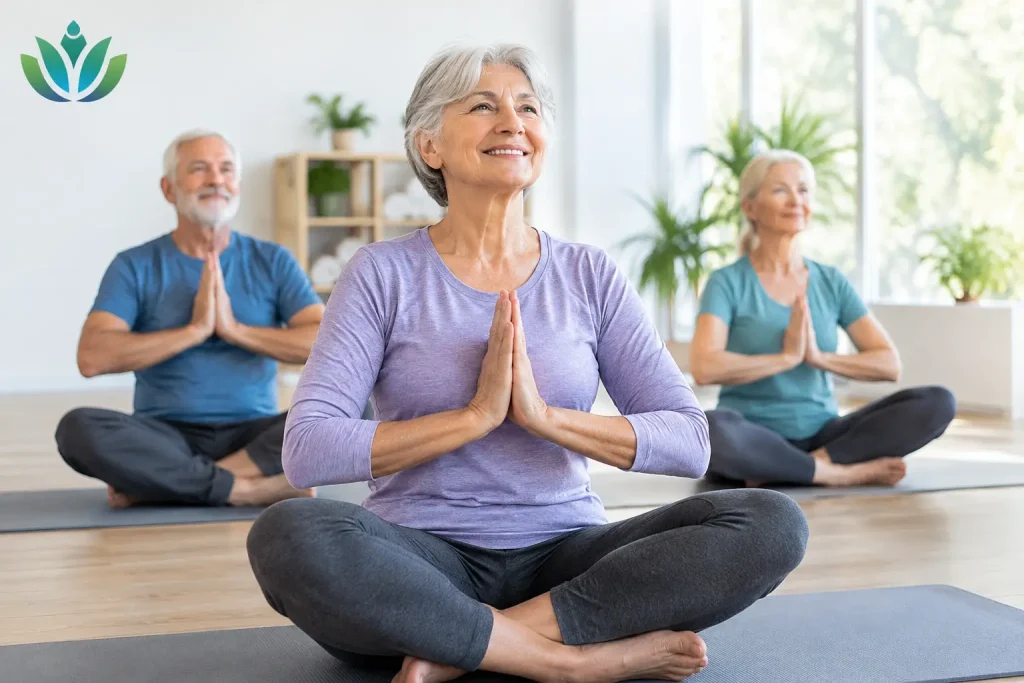
A chair, a clear stretch of floor, and a few patient minutes can change the way a day feels. The top benefits of senior yoga are not about achieving a difficult pose or keeping up with anyone else. They are about standing up with more confidence, reaching for something without fear, walking with greater ease, and feeling more at home in your body.
For many older adults, movement becomes smaller over time because of pain, stiffness, a fall, a health diagnosis, or simple uncertainty about what feels safe. Gentle, personalized yoga offers a supportive way to start moving again. It can meet you where you are today while helping you build toward the activities that matter most to you.
Top Benefits of Senior Yoga for Strength and Mobility
Senior yoga can look very different from the fast-paced classes shown in advertisements. A thoughtful session may include seated movements, standing poses supported by a chair, breathing, light strength work, and time to notice how your body responds. The goal is useful movement, not perfection.
Better balance for daily confidence
Balance is one of the most meaningful reasons seniors choose yoga. Practice often includes shifting weight from one foot to the other, strengthening the legs and core, improving posture, and learning to focus attention while moving. These skills support everyday moments, such as turning around in the kitchen, stepping off a curb, getting dressed, or navigating an uneven sidewalk.
Better balance does not mean a person will never fall. Falls can have many causes, including medications, vision changes, blood pressure concerns, and home hazards. Still, regular balance-focused movement can help a person feel steadier and more aware of their footing. That confidence alone can make walking and participating in life feel less intimidating.
Stronger muscles without harsh impact
Strength matters at every age. It helps with rising from a chair, carrying groceries, climbing stairs, and maintaining independence at home. Yoga can build strength through controlled positions that use body weight, resistance from a band, or the support of a chair.
For someone who has avoided exercise because high-impact routines feel uncomfortable, this can be a welcome alternative. A well-designed practice works the legs, hips, back, arms, and core without demanding jumping or quick transitions. Progress may be gradual, and that is exactly how it should be. Consistent, manageable effort usually serves the body better than pushing hard for one week and stopping the next.
More comfortable range of motion
Stiff hips, shoulders, ankles, and spine can make ordinary tasks feel frustrating. Yoga encourages gentle movement through a comfortable range, which may help make reaching, turning, bending, and walking easier over time. It can be especially helpful for people who spend long periods sitting.
Flexibility is not the same as forcing a stretch. A person does not need to touch their toes to benefit from yoga. The right stretch should feel mild and workable, never sharp, numb, or painful. Props and modifications make it possible to create space in the body without asking joints to do more than they are ready for.
Yoga Supports More Than Physical Fitness
A good yoga practice recognizes that wellness is personal. Physical changes are valuable, but many clients also notice shifts in mood, focus, and self-trust. When movement feels safe and encouraging, it can become a reliable part of a healthier routine.
A calmer response to stress
Slow breathing and intentional movement give the nervous system a chance to settle. For seniors managing worry, sleep disruptions, life changes, or the frustrations that can come with a changing body, this quiet pause can be deeply helpful. Yoga is not a replacement for mental health care when that is needed, but it can be a positive daily practice that supports emotional wellbeing.
The benefit is often practical. A person may leave a session feeling less tense in their shoulders, more patient with themselves, or better able to approach the rest of the day. Those small moments add up.
Greater body awareness
Senior yoga teaches people to pay attention to signals from their own bodies. Is one side weaker? Does standing up quickly cause dizziness? Is a shoulder feeling tight today? This awareness helps clients make wiser choices during exercise and daily life.
It also creates a healthier relationship with progress. Some days will feel stronger than others. Rather than seeing that as failure, yoga encourages adjustment. A seated practice may be the right choice one day, while a longer walk or more standing work may feel appropriate the next. Listening to the body is a strength, not a limitation.
Renewed confidence and connection
When someone has been afraid to move, even a modest improvement can feel enormous. Being able to stand taller, walk farther, or get up from a favorite chair with less effort can restore a sense of possibility. Yoga gives people opportunities to notice those wins.
In a group setting, it can also create connection. Shared movement, familiar faces, and encouragement can be especially meaningful for residents in senior communities or anyone feeling isolated. In a private session, the connection comes from having a coach who listens, adapts, and celebrates progress without judgment.
What Makes Yoga Safe and Effective for Seniors?
The best yoga program is not necessarily the one with the most challenging poses. It is the one built around the individual. Age alone does not determine what a person can do. Two people in their seventies may have entirely different needs, goals, and health histories.
A personalized instructor considers mobility, prior injuries, balance concerns, joint replacements, osteoporosis, Parkinson’s disease, neuropathy, back pain, blood pressure concerns, and comfort with getting down to or up from the floor. For some people, chair yoga is the ideal starting place. Others may benefit from a mix of seated, standing, and mat-based work with appropriate support.
Communication matters just as much as the movements themselves. Let an instructor know about diagnoses, recent changes in health, dizziness, pain, or fears about falling. A healthcare provider can also offer guidance when someone is recovering from surgery, has an unstable medical condition, or is unsure what level of activity is appropriate. Yoga should leave a person feeling challenged in a positive way, not depleted or unsafe.
Making Senior Yoga a Sustainable Habit
The most powerful routine is often the one that fits into real life. A 15-minute practice two or three times a week can be more valuable than an ambitious plan that feels impossible to maintain. Start with a time of day when energy is usually best, wear comfortable clothing, and keep a sturdy chair nearby if balance support is needed.
It helps to connect yoga with a personal goal. Perhaps you want to keep gardening, travel with more confidence, play with grandchildren, walk through the neighborhood, or remain independent in your home. A meaningful goal gives each stretch, breath, and strengthening movement a purpose.
Progress is rarely dramatic from one session to the next. It often arrives quietly: you notice less stiffness after sitting, feel more stable when turning, or realize you have not avoided the stairs this week. Those are real signs that your effort is supporting the life you want to live.
At EightLimFit, personalized senior fitness and yoga are designed around those everyday victories, whether support is needed in a Phoenix or Scottsdale home, a senior community, or through a virtual session. The focus stays on your goals, your pace, and the kind of encouragement that makes movement feel possible.
You do not have to wait until you feel stronger, more flexible, or more confident to begin. Begin with the body you have today, one supported movement at a time, and give yourself room to be surprised by what becomes easier.