
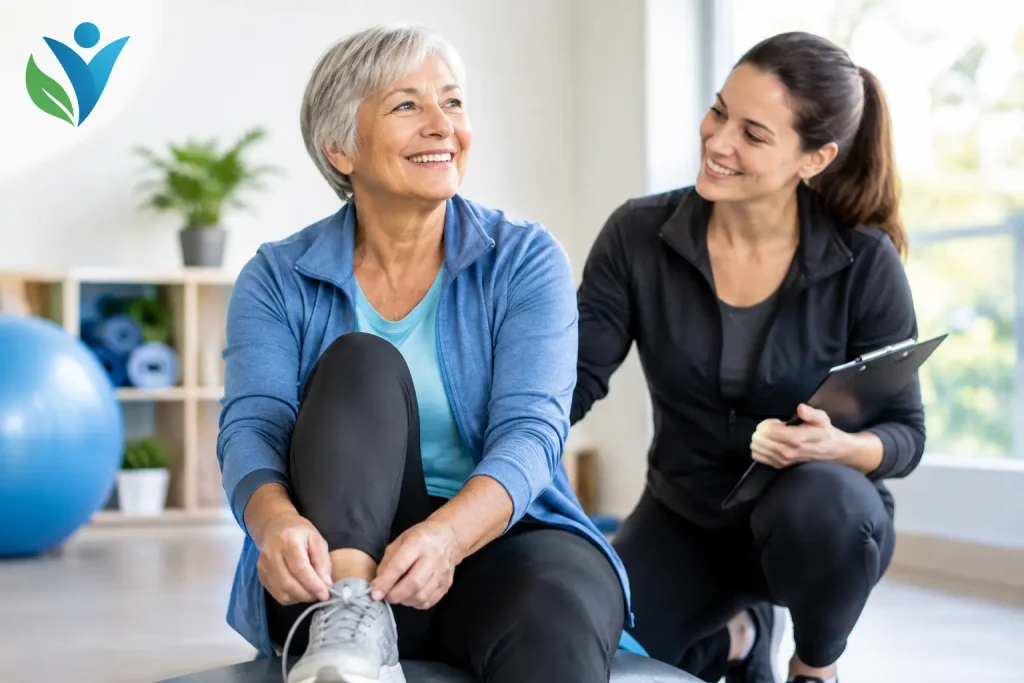
A fitness assessment is not a pass-or-fail test. It is a starting conversation about how your body feels and moves in daily life. When you prepare for senior fitness assessment, the goal is not to impress anyone with a certain number of repetitions or a perfect stretch. The goal is to arrive comfortable, informed, and ready to share what will help you feel stronger, steadier, and more confident.
For many older adults, that confidence may mean getting up from a favorite chair without using both hands. It may mean walking through a grocery store with less fatigue, keeping up with grandchildren, or feeling safer on uneven pavement. A thoughtful assessment helps turn those meaningful hopes into a plan that fits your body and your life.
Know What a Senior Fitness Assessment Looks At
A good senior fitness assessment considers much more than how much weight you can lift. Your trainer may observe how you stand, walk, sit down, rise from a chair, reach, bend, balance, and move through simple everyday patterns. They may also ask about stamina, flexibility, strength, pain, sleep, energy, and the activities that matter most to you.
The assessment should be adjusted to your current abilities. Someone recovering from a fall, living with Parkinson’s disease, managing neuropathy, or experiencing back pain needs a different approach than someone who simply wants to stay active and preserve strength. There is no benefit in pushing through discomfort to prove a point. Honest information gives your trainer a clearer picture and helps create a safer, more useful program.
Some assessments include simple measures such as how long it takes to stand from a chair several times, how far you can reach while seated, or how steadily you can stand with support nearby. These are not judgments about your age or worth. They are practical ways to notice where you are now and recognize progress later.
Prepare for Senior Fitness Assessment With the Right Information
You do not need to study for the appointment, but a little preparation can make the conversation easier. Before you meet with a trainer, take a few quiet minutes to think about your health history and daily movement.
Bring a current list of medications, including over-the-counter products and supplements if you use them. Be ready to mention recent surgeries, injuries, falls, dizziness, changes in vision, joint replacements, or diagnoses that affect movement. If you use a cane, walker, brace, orthotics, hearing aids, or another supportive device, bring it and use it as you normally would. Your everyday support is part of your real movement picture.
It also helps to know whether a doctor or physical therapist has given you specific activity guidelines or restrictions. If you have a medical condition that changes your exercise needs, ask your healthcare provider whether there are movements or intensity levels to avoid. A qualified trainer can work alongside those recommendations, but they should not replace medical advice.
Most importantly, do not minimize symptoms because you do not want to be a bother. Mention pain, tingling, shortness of breath, fear of falling, stiffness in the morning, or fatigue that arrives after a certain amount of activity. Details like these help shape a plan that respects your body instead of asking it to perform like someone else’s.
Wear What Helps You Move Safely
Choose clothing that lets you bend, sit, reach, and walk comfortably. You do not need expensive athletic wear. Stretchy pants or shorts, a comfortable shirt, and layers you can remove if you get warm are usually enough.
Supportive, secure shoes are especially helpful for a balance or walking assessment. Shoes that fit well and have non-slip soles are generally a better choice than loose slippers, high heels, or flip-flops. If you normally wear a particular type of shoe for walking, bring or wear that pair so the assessment reflects your typical routine.
Have a light meal and drink water as you normally would, unless your healthcare provider has given you other instructions. Arriving overly hungry, dehydrated, or exhausted can affect how you feel and move. At the same time, there is no need to spend the day before doing extra exercise. Rested, typical movement gives the most useful information.
Think Beyond Fitness Goals
“I want to get stronger” is a wonderful goal, but it becomes more powerful when connected to a real moment in your life. Consider what you want more freedom to do. Perhaps you want to carry laundry, garden with less back discomfort, climb the steps at a friend’s home, travel with more ease, or feel secure getting in and out of the car.
You may also have an emotional goal. Many people begin because they are tired of feeling cautious, isolated, or discouraged by changes in their body. Building physical strength can support confidence, but confidence also grows when you have someone listening, encouraging you, and noticing each step forward.
Write down two or three goals before your assessment if it helps you express them. You can also share what has made exercise difficult in the past. Maybe a crowded gym felt intimidating. Maybe pain interrupted your routine, or you started too aggressively and lost motivation. These experiences are valuable information, not failures. A personalized program should work with your preferences, schedule, energy, and current ability.
Give Yourself Permission to Be Honest
Some people feel nervous before an assessment because they worry they have “fallen behind.” Others are concerned that a trainer will expect too much, too soon. The right professional will meet you where you are, ask thoughtful questions, and explain what they are observing in language you can understand.
If a movement hurts, say so right away. If you feel unsteady, ask for a chair, wall, or other support. If you do not understand an instruction, ask for it to be demonstrated or broken into smaller steps. These are signs of wise self-advocacy.
It is also perfectly acceptable to say that your goal is to avoid getting worse. Maintaining mobility, strength, and independence is meaningful work. For someone in their 70s, 80s, or 90s, progress may look like standing taller, walking with more control, needing fewer rest breaks, or trusting their body a little more. Those changes can make an enormous difference in everyday life.
What Happens After the Assessment
A helpful assessment should lead to a clear next step, not confusion. Your trainer may recommend beginning with seated or supported movements, gentle balance practice, mobility work, light strength training, or short stamina-building activities. The starting point depends on your needs, and it can change as you become more capable.
Ask how progress will be tracked. Numbers can be useful, but they are not the only measure. Notice whether it becomes easier to stand from a chair, walk farther, turn with more control, reach overhead, or complete a household task without as much fatigue. Notice your mood, too. Regular movement often supports a greater sense of possibility.
For seniors who prefer personal attention, in-home or community-based sessions can be especially valuable because exercises can be practiced in the environment where daily life happens. At EightLimFit, the focus is on individualized support that honors your goals, your health history, and your pace.
Your assessment is simply the first opportunity to be seen clearly and supported well. Come as you are, share what matters, and let each small improvement remind you that a healthier, more capable life can begin with one comfortable next step.