
A fall can change more than a day. It can make a person second-guess a familiar staircase, avoid a favorite walk, or feel less comfortable moving around the home. Thoughtful fall prevention is not about living cautiously or giving up the things you enjoy. It is about building the strength, balance, awareness, and confidence to keep participating in daily life.
For many older adults, the goal is wonderfully practical: get up from a chair with ease, carry groceries, walk through the community, garden, travel, play with grandchildren, and remain independent. Small, consistent choices can make those goals more attainable.
Fall Prevention Starts Before the Fall
Falls rarely have just one cause. Sometimes the issue is a loose rug or poor lighting. Other times, it is a gradual change in leg strength, foot sensation, vision, medication effects, reaction time, or confidence. A person may begin holding furniture while walking through the house without realizing that their body is asking for more support.
This is why prevention works best when it looks at the whole person. A strong body matters, but so do sleep, stress, hydration, footwear, the home environment, and a willingness to ask for help when something feels different. There is no judgment in needing a handrail, a mobility device, or an adjusted exercise. Smart support helps people continue doing more safely.
Build Strength for Everyday Movement
Leg and core strength are central to safer movement. Standing up from a chair, stepping over a curb, getting in and out of a car, and recovering from a small stumble all require the body to respond with enough strength and control.
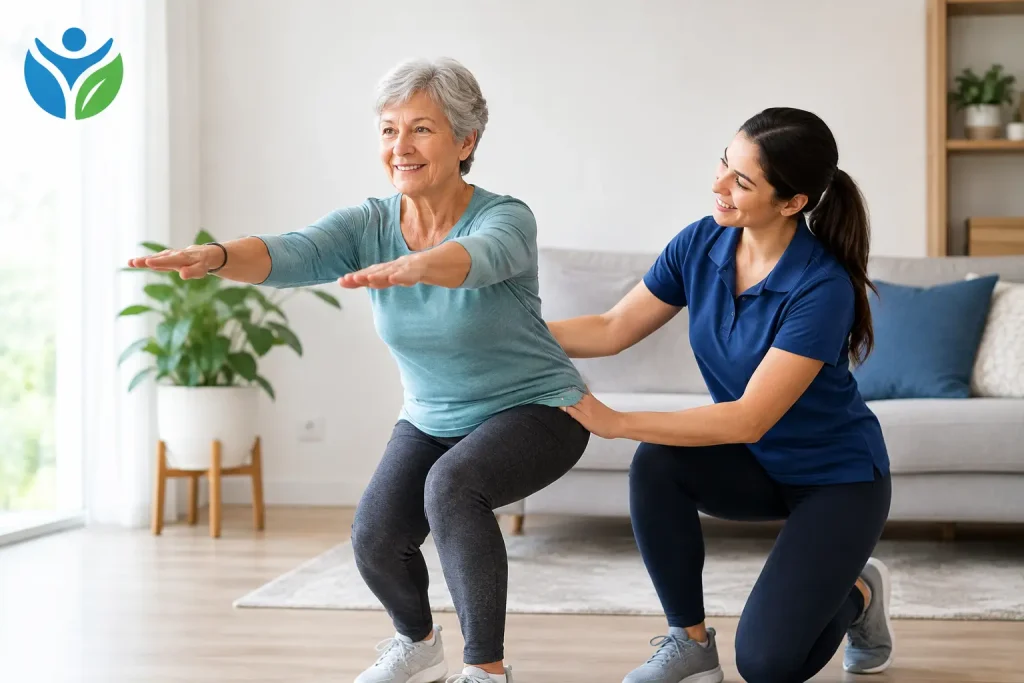
The best exercises are not necessarily the hardest ones. They are the ones a person can do safely, consistently, and with good form. Chair stands, supported squats, heel raises, gentle marching, step-ups, and resistance exercises can all help when chosen for an individual’s current ability. A person who has been inactive, has arthritis, Parkinson’s disease, back pain, peripheral neuropathy, or another health concern may need a slower starting point and more personalized guidance.
Progress can be encouragingly simple. Perhaps someone starts by using both hands to rise from a chair, then gradually needs only one. Perhaps a short walk becomes more comfortable, or standing at the kitchen counter feels less tiring. These changes add up because daily life is made of repeated movements.
Balance Is a Skill You Can Practice
Balance is not something people either have or lose forever. It is a skill that can be trained with patience. Safe balance practice may include shifting weight from side to side, standing with feet closer together while holding a counter, controlled heel-to-toe walking, or practicing a single-leg stance with sturdy support nearby.
The key word is safe. Balance exercises should be appropriate for the individual and performed near a stable surface or with a qualified professional present when needed. Trying an advanced movement too soon can create fear instead of confidence. The right challenge feels focused and manageable, not reckless.
Yoga-inspired movement can also be valuable because it encourages posture, body awareness, flexibility, steady breathing, and intentional transitions from one position to another. It can be adapted for a chair, a wall, or a limited range of motion. The goal is not to force a pose. The goal is to help the body move with more control and ease.
Make the Home Support Safer Habits
A home should make daily routines easier, not create hidden obstacles. Many falls occur during ordinary moments: getting up at night, reaching for something in a closet, stepping out of the shower, or carrying laundry through a hallway.
Take a walk through the home with fresh eyes. Clear pathways of cords, papers, pet toys, and low furniture. Secure or remove loose rugs. Make sure frequently used items are easy to reach without climbing or stretching. Add bright lighting to hallways, stairways, entrances, and bathrooms, especially if nighttime trips are common.
Bathrooms deserve extra attention. Non-slip surfaces, grab bars installed securely in the right locations, and a shower chair when appropriate can reduce unnecessary risk. On stairs, sturdy handrails and visible step edges make a meaningful difference. Outdoors, address uneven walkways, clutter near entrances, and areas that become slick after rain or watering.
These adjustments are not signs of weakness. They are ways of protecting energy, mobility, and peace of mind.
Pay Attention to Shoes, Vision, and Health Changes
Supportive shoes with secure backs and non-slip soles are generally safer than loose slippers, flip-flops, or socks on smooth floors. The right choice depends on the person and the activity, but footwear should help the foot stay stable rather than slide or catch.
Vision changes can also affect depth perception and awareness of steps, curbs, and uneven surfaces. Regular eye care and updated prescriptions can be part of a practical fall prevention plan. Hearing changes matter, too, because awareness of the surroundings supports safe movement in busy places.
It is also wise to speak with a healthcare provider after a fall, a near-fall, new dizziness, unusual fatigue, numbness in the feet, or a sudden change in walking. Some medications, alone or in combination, can contribute to lightheadedness or unsteadiness. Do not stop or change medication without medical guidance, but do bring concerns forward. A conversation can reveal options that make movement safer.
Confidence Is Part of Fall Prevention
After a fall or close call, fear can become its own barrier. A person may move less because they are worried about falling, but less movement can lead to further weakness and stiffness. It can become a difficult cycle.
The answer is not to push through fear or pretend it is not there. It is to rebuild trust gradually. Start with movements that feel secure. Practice in a familiar space. Use support when needed. Celebrate the ability to stand a little taller, walk a little farther, or turn around with more control.
A supportive coach can make this process feel less overwhelming. At EightLimFit, personalized training meets each client where they are, with attention to mobility, strength, balance, lifestyle habits, and the confidence needed to keep moving forward. For some people, in-home guidance is especially helpful because the exercises can connect directly to the places and movements that matter most in everyday life.
A Personal Plan Works Better Than a Generic Routine
There is no single fall prevention exercise that works for everyone. Someone who is active but notices poor balance on uneven ground needs a different plan than someone recovering confidence after a hospital stay. A person with neuropathy may benefit from strategies that differ from those for a person whose biggest challenge is lower-body weakness or dizziness.
A thoughtful plan begins with observation: How does the person rise from a chair? How steady are they when turning? Do they avoid one side? Are they tired after a short walk? What activities do they most want to keep doing? From there, movement can be adjusted in small, meaningful ways.
Consistency matters more than intensity. Ten focused minutes practiced regularly can be more useful than a demanding routine that feels intimidating and gets abandoned. With the right support, safer movement becomes less of a project and more of a natural part of life.
Every confident step is worth honoring. Start with one practical change, one supported exercise, or one honest conversation about what feels difficult. Your body can learn, adapt, and grow stronger at any stage of life.