
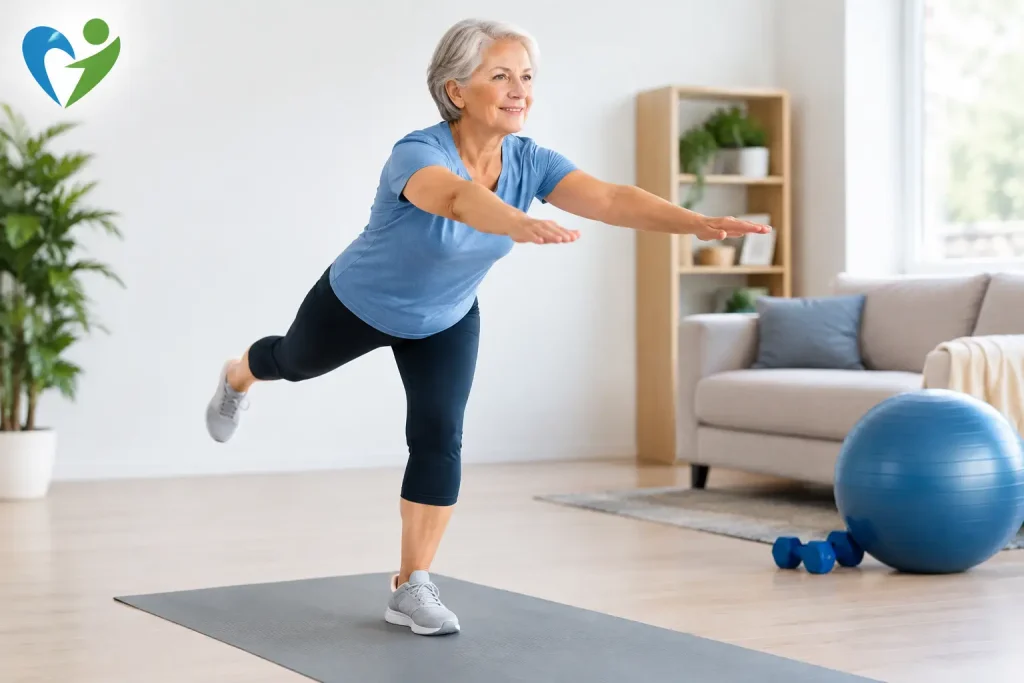
A missed curb, a quick turn toward the phone, or getting up too fast from a favorite chair can change a person’s confidence in an instant. A guide to fall prevention exercises should not make movement feel frightening or complicated. It should help you practice the everyday skills that keep you feeling steady, capable, and more at home in your own body.
Falls are not simply a part of getting older. While some health conditions and medications can affect balance, strength, vision, sensation, and reaction time, many people can improve the physical skills that support safer movement. The goal is not to become an athlete. It is to make standing, walking, turning, reaching, and climbing stairs feel more secure.
Why fall prevention begins with everyday strength
Balance is more than standing on one foot. It is the ability to notice that your body is shifting and make a small correction before that shift becomes a fall. Your legs, hips, core, ankles, eyesight, inner-ear system, and nervous system all contribute. That is why a well-rounded routine includes more than one balance pose.
Leg strength matters because your legs help you rise from a chair, recover after a stumble, and manage steps or uneven ground. Ankle mobility matters because stiff ankles make it harder to adjust when a foot lands differently than expected. Posture and core strength also play a role, especially when you are carrying groceries, looking over your shoulder, or walking while talking.
A good routine can be simple, but it needs to be consistent and appropriate for your current abilities. Small improvements add up. Someone who starts by holding a sturdy counter with both hands may eventually use one hand, stand taller, or take a few more controlled steps with confidence.
Before you begin this guide to fall prevention exercises
Choose a clear space with good lighting, supportive shoes, and a stable chair that will not slide. A kitchen counter is often more secure than a lightweight piece of furniture. Keep a phone nearby if you exercise alone, and do not use a rolling chair, unstable table, or towel rack for support.
If you have had a recent fall, frequent dizziness, new weakness, chest pain, severe joint pain, or a diagnosed condition that affects movement, speak with your medical provider before beginning. The same is true if peripheral neuropathy, Parkinson’s disease, medication changes, or low blood pressure affect your balance. Exercise can be very helpful, but the right starting point depends on the person.
Move slowly enough that you can breathe normally and stay in control. Mild muscle effort is expected. Sharp pain, spinning, nausea, or feeling faint is a signal to stop and get guidance. There is no prize for pushing through a movement that does not feel safe.
Five exercises for steadier movement
Aim to practice these exercises two or three days per week. Start with one set of six to eight repetitions, or 10 to 20 seconds for standing balance work. As the movements become easier, gradually increase the time or repetitions. Quality comes before quantity.
1. Sit-to-stand from a chair
Sit toward the front of a sturdy chair with both feet flat on the floor, about hip-width apart. Bring your feet slightly behind your knees. Lean forward from your hips, press through your feet, and stand tall. Pause, then slowly lower back down with control.
Use your hands on the armrests or chair seat at first if needed. Over time, try using less hand support. This practical movement builds the leg and hip strength needed for getting up from a chair, bed, or toilet. It also teaches the forward weight shift that many people lose when they become cautious about standing.
2. Heel-to-toe weight shifts
Stand behind a counter with your hands resting lightly on it. Shift your weight slowly toward your toes, lifting your heels a little if comfortable. Return to center, then shift toward your heels and gently lift your toes. Keep your knees soft and your chest lifted.
This exercise wakes up the ankles and helps you feel where your weight is over your feet. It can be especially useful for people who feel unsteady on slopes, thresholds, or uneven sidewalks. If you have reduced feeling in your feet, hold on securely and move within a smaller range.
3. Side leg raises
Hold the counter and stand tall without leaning into it. Shift your weight into one leg and gently move the other leg out to the side. Keep your toes pointed forward and your torso upright. Bring the leg back in slowly, then repeat on the other side.
The muscles along the outside of the hips are important stabilizers when you walk, turn, or step sideways to avoid an obstacle. A common mistake is tipping the body to the side to lift the leg higher. A smaller, well-controlled lift is more valuable than a large one with poor alignment.
4. Supported marching
With both hands near the counter, slowly lift one knee as though beginning to march in place. Lower it with control, then lift the other knee. Keep your posture tall rather than watching your feet the entire time.
Marching improves weight transfer from one leg to the other, which is a basic part of walking. Begin with very small knee lifts if you feel uncertain. When you are ready, try pausing for one or two seconds with one foot lifted while keeping a hand close to support. This gently challenges single-leg balance without asking you to let go before you are ready.
5. Heel-to-toe walking at the counter
Stand beside a counter so you can touch it as needed. Take a short step forward, placing the heel of one foot close to the toes of the other. Continue for several slow steps, keeping your eyes forward. Turn carefully and walk back.
This can feel challenging because it narrows your base of support. That challenge is useful, but only when you have reliable support nearby. If placing heel directly in front of toe feels too difficult, leave a few inches between your feet. Progress is not about making the exercise look perfect. It is about becoming calmer and steadier with each practice.
Make balance practice part of real life
Dedicated exercise matters, yet fall prevention works best when it carries into daily routines. Pause before standing up. Give your body a moment to find its balance before taking the first step. When turning, take several small steps rather than twisting quickly on one foot. Keep frequently used items within easy reach, and avoid carrying so much that you cannot see the floor ahead.
Your home environment deserves attention too. Clear loose cords and small rugs that slide, use night-lights for the path to the bathroom, and keep stairs well lit. Wear shoes or secure slippers with non-slip soles rather than walking on smooth floors in socks. These changes do not replace exercise, but they reduce unnecessary risks while your strength and confidence grow.
Hydration, regular meals, sleep, and medication reviews can also affect steadiness. If you notice dizziness when rising, tell your provider. Sometimes a simple adjustment in habits or care can make a meaningful difference.
When personalized support makes the difference
A generic online routine may be a fine starting point for some people, but it cannot see whether you are leaning, holding your breath, favoring one hip, or becoming fatigued. It also cannot adapt in the moment when arthritis, back pain, neuropathy, Parkinson’s symptoms, or fear of falling changes what feels safe that day.
Individualized coaching can meet you where you are. Perhaps you need to begin seated and build toward standing exercises. Perhaps you are already active but need better turning, stair confidence, or recovery after a near-fall. The right plan honors both your goals and your current body, then gives you a clear path forward. For older adults in Phoenix and Scottsdale, EightLimFit offers supportive in-home and community-based training designed around that kind of personal attention.
Confidence returns through experience. Each controlled chair rise, steady step, and safe practice session is evidence that your body can learn, adapt, and support the life you want to keep living.