
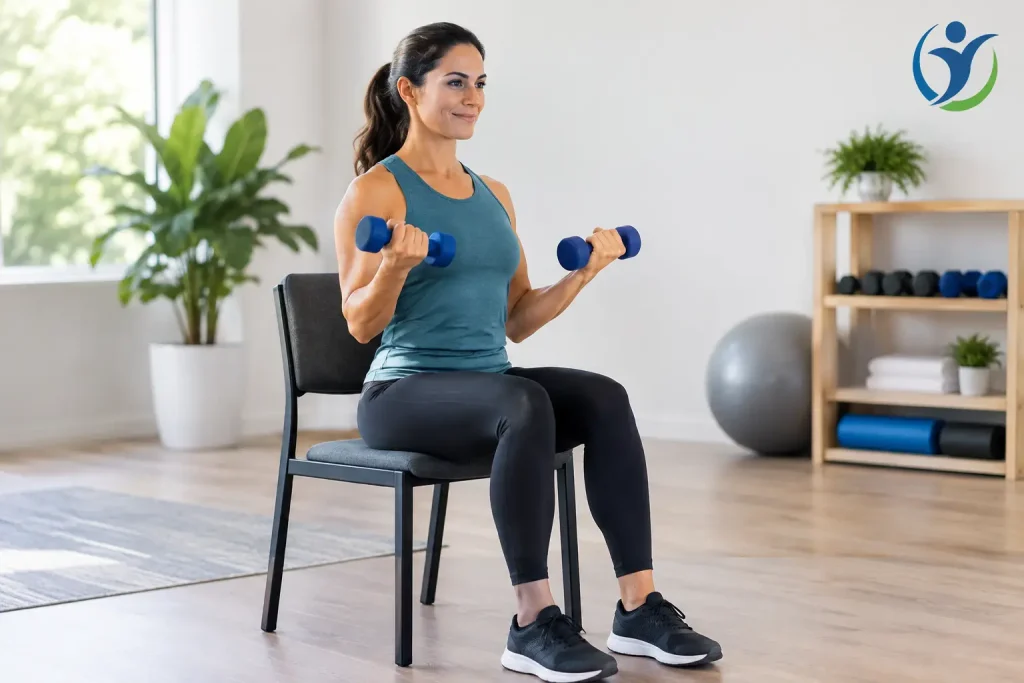
A chair can be much more than a place to rest. For someone rebuilding confidence after a fall, managing joint pain, living with a mobility change, or simply wanting to stay active without getting down to the floor, the best seated strength exercises create a practical path forward. They help you work the muscles that make everyday life possible: standing up, reaching into a cabinet, carrying groceries, turning in bed, and walking with greater assurance.
Seated exercise is not a lesser version of fitness. When movements are chosen thoughtfully and performed with attention, a chair-based routine can build meaningful strength, improve posture, support balance, and help you feel more capable in your own body. The right starting point depends on your health history, energy level, and goals, so let comfort and good form guide the pace.
Why seated strength work matters
Strength tends to show up in the moments we do not always call exercise. It is the ability to rise from a favorite chair without pushing hard on the armrests. It is steadiness when stepping off a curb, endurance during a family outing, and the confidence to move around the house independently.
For older adults and anyone with balance concerns, seated training offers support while still challenging the arms, legs, hips, and core. It can also be a helpful option on days when standing exercise feels unsteady or fatigue is high. That said, a chair should not become a reason to avoid standing forever if standing is appropriate for you. Often, seated strength work is a bridge that helps prepare the body for safer walking, balance practice, and sit-to-stand training.
Choose a sturdy chair that does not roll, ideally one with a firm seat and a backrest. Place it on a level surface, wear supportive shoes if your feet tend to slip, and keep enough room around you to move freely. If you have had a recent surgery, new or worsening pain, chest symptoms, dizziness, or a condition that affects movement, ask your medical provider or qualified fitness professional which movements fit your needs.
The best seated strength exercises to begin with
Move slowly enough that you can feel the working muscles. Aim for smooth breathing instead of holding your breath, and stop if a movement causes sharp pain, unusual shortness of breath, or lightheadedness. You may start with one set of 6 to 10 repetitions and gradually work toward two or three sets as your stamina improves.
1. Seated knee extensions
Sit tall with both feet flat on the floor. Slowly straighten one knee until your lower leg is nearly parallel with the floor, pause briefly, then lower with control. Alternate sides or complete all repetitions on one leg before switching.
This simple movement strengthens the front of the thigh, which supports standing, stair climbing, and more stable walking. Keep the motion comfortable. You do not need to lock the knee or lift the leg very high to get benefit.
2. Seated marches
With your hands resting lightly on your thighs or the chair, lift one knee a few inches, lower it, then lift the other. Sit upright rather than leaning back as the legs move.
Seated marching strengthens the hip flexors and helps build coordination between the core and lower body. It can be especially useful for people who feel their feet shuffle when they are tired. For a gentle challenge, slow the movement down or pause at the top of each lift.
3. Heel raises and toe raises
Keep both feet on the floor. Lift your heels while pressing the balls of your feet down, then lower. Next, keep your heels grounded and lift your toes toward your shins.
These small movements work the lower legs and ankles, areas that matter greatly for walking confidence and balance. They are also easy to include during a long period of sitting. If one ankle is less mobile, work within its available range rather than forcing it.
4. Seated leg press
Place a small exercise ball, firm pillow, or rolled towel between your knees. Gently squeeze inward, hold for three to five seconds, then relax. Keep your feet grounded and your shoulders soft.
This exercise engages the inner thighs and pelvic region while encouraging a stable seated posture. The effort should feel purposeful, not like a strain. A light squeeze performed consistently is more valuable than squeezing as hard as possible.
5. Seated rows with a resistance band
Loop a resistance band securely around the middle of both feet, holding one end in each hand. Start with arms extended comfortably in front of you, then draw your elbows back alongside your ribs as if you are trying to place your shoulder blades gently into your back pockets. Return slowly.
Rows strengthen the upper back, arms, and postural muscles that can help counter the rounded shoulders many people develop from sitting. Use a light band at first. If holding the band around your feet feels awkward or unstable, a trainer can offer other setup options.
6. Seated chest press
Hold a resistance band across your upper back, with an end in each hand. Begin with your elbows bent by your sides and press both hands forward until your arms are comfortably extended. Slowly return.
The chest press works the chest, shoulders, and triceps, muscles used when pushing open a heavier door or rising from a chair with support from the armrests. Keep your shoulders away from your ears. If you have shoulder pain, reduce the range of motion or choose a different exercise.
7. Bicep curls
Hold light hand weights, water bottles, or no weight at all to begin. With your elbows close to your sides and palms facing forward, bend your elbows to bring your hands toward your shoulders. Lower slowly.
Bicep curls support everyday lifting and carrying, from a small bag to a laundry basket. The lowering phase matters just as much as the lift, so resist the urge to let the arms drop. A weight that allows controlled movement is the right weight.
8. Seated overhead press
Start with very light weights or simply raise your hands without weight. Bring your hands to shoulder height, then press upward only as far as is comfortable before lowering.
This exercise can strengthen the shoulders and arms for reaching overhead, but it is not right for every body. People with shoulder limitations, neck discomfort, or certain medical concerns may do better with a forward reach or another modified shoulder movement. Comfort and control come before range.
9. Seated core brace and turns
Sit near the front of the chair with your feet firmly planted. Gently tighten your abdominal muscles as though preparing for a light cough, without holding your breath. Hold for five seconds, then relax. After several braces, place your hands across your chest and slowly rotate your torso a few inches to one side, return to center, and repeat on the other side.
A stronger core is not about forcing a dramatic twist or doing endless crunches. It is about creating a stable center that supports easier reaching, turning, and standing. Keep the movement small and avoid twisting through pain, especially if you have a history of back issues.
How to turn these movements into a routine
A short routine done regularly often serves you better than a demanding workout that feels impossible to repeat. On two or three nonconsecutive days each week, choose four to six exercises that address your current needs. For example, someone focused on getting up from a chair may prioritize knee extensions, marches, leg presses, rows, and core braces. Someone hoping to improve upper-body function may include rows, chest presses, curls, and an appropriate shoulder movement.
Begin with a few easy minutes of movement, such as ankle pumps, shoulder rolls, and gentle marching. Then perform your chosen exercises with rests whenever needed. You should feel effort in the muscles, but still be able to speak in full sentences. As the routine becomes easier, add a few repetitions, a second set, a slightly firmer band, or a longer pause during the challenging part of the exercise. Change one thing at a time.
Consistency also looks different from person to person. Some days you may complete a full session; other days, a few knee extensions and ankle raises may be the win. Both count. Progress is built through repeated care, not punishment.
Personalizing seated exercise for real life
The best routine is one that respects what your body is telling you. Peripheral neuropathy may call for extra attention to foot placement and a clear floor. Parkinson’s disease may benefit from deliberate, larger movements and focused pacing. Arthritis may mean a slower warm-up and a smaller range of motion on stiff days. Back pain may improve when posture, core control, and hip strength are addressed carefully rather than aggressively.
This is where individualized guidance can make a meaningful difference. A knowledgeable trainer can observe how you move, adjust chair height or resistance, and build progressions that match your goals – whether that goal is walking farther, getting in and out of the car more easily, or feeling stronger for an upcoming trip. EightLimFit provides this kind of supportive, personalized coaching in Phoenix and Scottsdale homes, senior communities, and virtual sessions.
Your chair is a starting point, not a limit. Give yourself permission to begin where you are, celebrate the movements that feel better, and let each small repetition remind you that strength can grow at any age.