
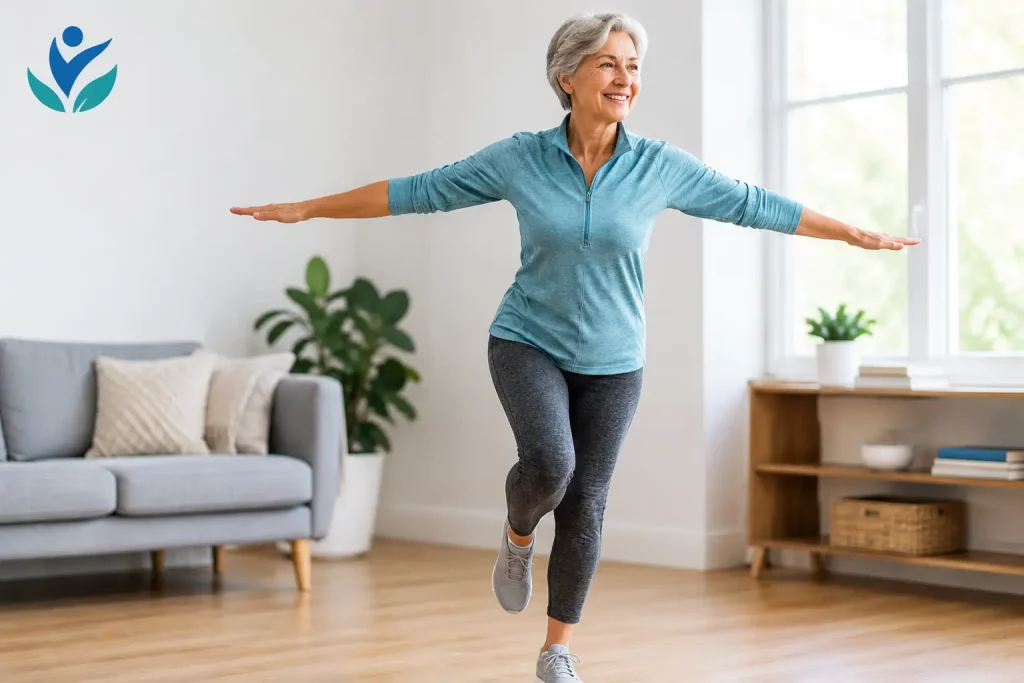
A fall can change more than a day’s plans. It can make a person hesitate before getting out of bed, avoid a favorite walk, or question whether they can continue living independently. Learning how to reduce fall risk is not about moving through life fearfully. It is about building the strength, awareness, and support that help you keep doing the things you love with greater confidence.
For many older adults, a fall is not caused by one single issue. It may be a combination of weaker leg muscles, a rushed trip to the bathroom at night, uneven footwear, medication changes, low vision, or a moment of distraction. The encouraging news is that many of these factors can be addressed thoughtfully, one practical step at a time.
How to Reduce Fall Risk Begins With Your Daily Movement
Balance is not something you either have or do not have. It is a skill your body practices every time you stand from a chair, turn around in the kitchen, step over a curb, or reach for something on a shelf. When movement becomes less frequent, muscles and balance reactions can gradually become less reliable.
A personalized movement routine can help strengthen the legs, hips, ankles, and core – the areas that support steadier walking and safer transitions. The best routine is one that meets you where you are now. For one person, that may mean practicing standing up from a sturdy chair with support nearby. For another, it may mean gentle heel raises at the kitchen counter, seated leg exercises, or a guided walk.
Consistency matters more than intensity. A short routine practiced regularly can make a meaningful difference over time. The goal is not to push through pain or prove anything. The goal is to help your body feel more capable in everyday moments.
Practice Balance Safely, Not Alone
Balance exercises should feel challenging enough to require attention, but never so difficult that you are at risk of falling while practicing. Begin near a solid counter or sturdy piece of furniture. Avoid using a rolling chair, towel bar, or anything that could shift under your weight.
Simple activities may include standing with your feet a little closer together, slowly shifting weight from one foot to the other, or practicing a controlled turn. If you use a walker or cane, keep using it unless a qualified professional has advised otherwise. Mobility aids are tools for independence, not signs of failure.
If you have Parkinson’s disease, peripheral neuropathy, dizziness, significant arthritis, recent surgery, or a history of falls, an individualized program is especially valuable. What is safe and helpful depends on your body, your symptoms, and your environment. A compassionate trainer who understands mobility limitations can help you work at an appropriate pace while still making progress.
Build Strength for the Moments That Matter
Many falls happen during transitions: rising from a chair, stepping out of a car, climbing stairs, or bending down and then standing back up. These movements require leg strength, core control, and coordination.
Rather than focusing only on exercise for exercise’s sake, connect strength work to real life. Practice getting in and out of a chair with good form. Strengthen the muscles that help you step up, carry groceries, and maintain an upright posture. Gentle yoga-based movement can also support flexibility, body awareness, breathing, and confidence in how your body moves through space.
Pain changes the equation. If an activity causes sharp pain, worsening numbness, chest discomfort, unusual shortness of breath, or lightheadedness, stop and speak with your health care provider. There is a difference between the normal effort of building strength and a warning sign that needs attention.
Make Your Home Easier to Move Through
A strong body is one part of fall prevention. Your surroundings matter just as much. A familiar home can still contain small obstacles that become more significant when lighting is low, vision changes, or fatigue sets in.
Walk through your home at the time of day when you usually feel most tired. Notice where you hold onto furniture, where shadows make it hard to see, and where you need to maneuver around cords or clutter. Small changes can create a much clearer path.
Consider addressing these common household risks:
- Remove loose throw rugs or secure them with non-slip backing.
- Keep walkways, stairs, and doorways free of cords, baskets, shoes, and low furniture.
- Add brighter lighting, especially between the bedroom and bathroom, and use night-lights where needed.
- Install secure grab bars in the shower and near the toilet. A towel rack is not designed to hold body weight.
- Choose supportive, well-fitting shoes with non-slip soles instead of loose slippers or socks on smooth floors.
There is no need to make a home feel clinical. The goal is simply to make the space work better for you. A clear hallway, a stable chair, and good lighting can protect confidence as much as they protect physical safety.
Review Vision, Health Changes, and Medications
Sometimes fall risk changes even when your exercise routine and home have not. A new medication, an adjustment in dosage, dehydration, infection, vision changes, or a drop in blood pressure can affect steadiness. If you have felt dizzy, unusually sleepy, faint, or off-balance, bring it up with your doctor or pharmacist.
Regular vision checks are also worthwhile. Depth perception and contrast sensitivity can change gradually, making steps, curbs, and changes in flooring harder to see. Keep glasses prescriptions current, and be mindful that bifocals can make it harder to judge the distance of stairs or curbs when looking down.
It can help to keep a short note of when unsteadiness occurs. Does it happen when standing quickly? After taking a certain medication? In the evening? During a walk outside? Patterns give your care team useful information and can lead to more specific solutions.
Slow Down at the Times You Usually Rush
Many people are most vulnerable when they are hurrying. You may rush to answer the phone, get to the bathroom, catch up with someone in another room, or carry too many things at once. These are ordinary moments, but they can become risky when balance is already challenged.
Give yourself permission to pause. Sit at the edge of the bed for a few seconds before standing. Turn on a light before walking at night. Keep frequently used items within easy reach. Use both hands on a stair rail when available, and avoid carrying items that block your view of the floor.
This is not about becoming overly cautious. It is about replacing automatic habits with supportive ones. A few extra seconds can make movement more controlled and far less stressful.
Confidence Grows Through Support and Repetition
After a fall or near-fall, it is common to become less active because movement feels uncertain. Unfortunately, avoiding movement can lead to more weakness, stiffness, and isolation, which may increase risk over time. The answer is not to ignore fear. It is to rebuild trust in your body through safe, supported practice.
A personalized fitness professional can be a steady partner in that process. At EightLimFit, sessions can be adapted for your home, community setting, or virtual routine, with attention to your goals, health history, and what feels realistic in your day-to-day life. Progress may look like standing more easily, walking farther, turning with less hesitation, or feeling comfortable joining family for an outing again.
You do not need to wait until a fall happens to care for your balance. Choose one helpful change this week: clear a pathway, schedule a vision check, practice a few supported sit-to-stands, or ask for guidance. Every safe step you practice is a quiet investment in the freedom to keep living life on your terms.