
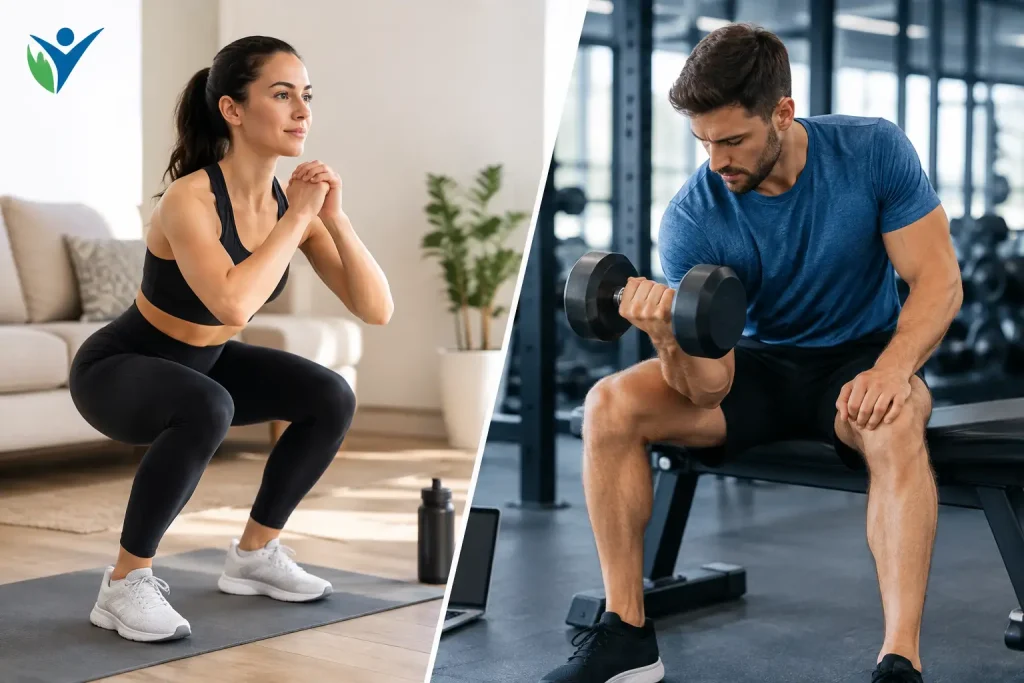
A fitness plan only works when it fits into real life. The choice between in home versus gym training is not about which option is tougher or more impressive. It is about where you feel safe, supported, and ready to keep showing up for the strength, mobility, balance, and confidence you want to build.
For some people, a gym provides welcome energy and variety. For others, especially adults managing pain, balance concerns, a chronic condition, or a busy schedule, home is where progress becomes possible. Both settings can be valuable. The best choice starts with an honest look at your goals, comfort, and daily routine.
What in-home training makes possible
In-home personal training brings the session to the place where your body moves through everyday life. That matters. If getting up from a favorite chair feels difficult, if stairs create uncertainty, or if reaching into a cupboard challenges your shoulder, those movements can become part of a thoughtful fitness plan.
A trainer can see the details that a gym does not reveal: the height of a sofa, the narrow hallway where you turn, the steps you use every day, or the kitchen counter that supports you while you practice standing balance. Training can be adapted to your space and to the routines that help you remain independent.
This setting also removes several common barriers. There is no drive across town, search for parking, walk through a large facility, or worry about arriving at a certain time in front of other people. On a hot Phoenix afternoon, avoiding that extra trip can make it much easier to keep a commitment to yourself.
For many older adults, privacy is another meaningful benefit. You can ask questions freely, take a break when you need one, and focus without comparing yourself to anyone else. A supportive trainer meets you where you are, whether you are returning to movement after a long break or working to preserve the abilities you already have.
The home advantage for functional strength
At home, exercise can connect directly to the life you want to live. A session may include practicing a safer sit-to-stand, improving leg strength for walking, building core stability for better posture, or increasing flexibility so getting dressed feels less frustrating. These are not small goals. They are the building blocks of freedom.
Home training can also be effective with modest equipment. Resistance bands, light weights, a sturdy chair, and body-weight movements can create a challenging, progressive program. The value is not in having the most machines. It is in having a plan that evolves as your stamina, strength, and confidence improve.
When gym training may be a good fit
A gym can be a great choice for someone who enjoys a change of scenery, likes access to a wide range of equipment, and feels motivated by being around other active people. If your goals include heavier strength training, swimming, cycling, or using specialized machines, a fitness center may give you useful options.
Some people also thrive on the structure of leaving home for a workout. The drive becomes a transition from work or caregiving into personal time. Group classes can offer social connection, and seeing familiar faces may make exercise feel more enjoyable.
Gyms do have trade-offs. They can be busy, noisy, and overwhelming for someone who is new to fitness or uncertain about using equipment. A large facility may require more walking than expected, and the effort of getting there can become a reason to skip a session on difficult days. For a person with neuropathy, back discomfort, Parkinson’s disease, or changing balance, a one-size-fits-all class may not provide enough individual attention.
That does not mean the gym is off limits. It means the program, pace, and environment deserve careful consideration. The right gym experience is one where you feel comfortable asking for help and can exercise without feeling rushed or overlooked.
In-home versus gym training: consider your real barriers
The most helpful question is not, “Which option burns more calories?” Ask, “What is most likely to help me move consistently three months from now?” Consistency creates results, especially when your goals involve safer movement, stronger muscles, improved balance, better mood, and greater energy for daily life.
Think about what has interrupted your fitness efforts in the past. If transportation, weather, time, self-consciousness, or fatigue have gotten in the way, in-home sessions may remove the obstacle that matters most. If you get energized by equipment, classes, and social interaction, a gym could help you stay engaged.
Your current health and mobility should guide the decision, too. Someone recovering confidence after a fall, adjusting to a new diagnosis, or dealing with limited mobility may benefit from the quiet focus and personal observation of an in-home session. Someone who moves comfortably and enjoys independent exercise may use a gym very successfully with a clear program.
There is no prize for choosing the more complicated route. The right setting is the one that supports your body and makes healthy habits feel sustainable.
Personalized support matters more than the location
Whether you train in a living room or a fitness center, personal attention changes the experience. A good trainer listens first. They ask what you want to be able to do, what feels hard right now, what you enjoy, and what concerns you carry into exercise.
Then the program becomes personal. One client may want to walk farther with a spouse. Another may want more ease standing at the counter to prepare meals. A professional under stress may need movement, accountability, and a steady conversation that helps restore a sense of direction. Progress is not limited to a number on a scale or the amount of weight lifted.
At EightLimFit, the goal is to support the whole person. Training may include strength, flexibility, balance, and stamina work alongside encouragement, realistic goal setting, and accountability. That combination helps clients recognize their own progress and continue building on it.
A blended approach can work beautifully
You do not always have to choose one setting forever. Some people begin at home to establish safe movement patterns and a consistent routine. As their confidence grows, they may add walks outdoors, attend a class, or use a gym independently once or twice a week.
Others use the gym for equipment they enjoy and schedule in-home sessions for focused guidance, mobility work, or accountability. Virtual sessions can also offer an option when travel is not practical. Your fitness plan can change with the seasons, your schedule, and your needs.
Choose the setting that helps you say yes
Before committing, picture an ordinary day when your energy is lower than usual. Which option would still feel manageable? That answer is often more useful than choosing based on the ideal version of your week.
Also consider how you want to feel during exercise. Some people need the lively atmosphere of a gym. Others do their best work in a familiar space with a compassionate guide nearby. Neither preference is wrong. Feeling respected, capable, and understood is part of a healthy fitness experience.
If safety is a concern, start gently and let your confidence lead the pace. The goal is not to prove anything. It is to create enough strength, steadiness, and trust in your body that everyday life feels more open again.
Your next workout does not need to be perfect or dramatic. It simply needs to be a meaningful step toward the life you want to keep living – one where you can move with greater ease, meet your goals with support, and feel proud of what your body can do.